Bridgeport Smokestack: Documenting a Landmark Before Demolition

Updated: Oct 4
Some places stay in your head.

As a kid, I used to stare out the car window and memorize the city as it passed by. Years later, that instinct became part of why I document Connecticut from the air. Not for spectacle, but to hold onto a clear visual record of places that are changing.
That is why I photographed the Bridgeport smokestack in 2020.
On September 28, 2025, a large portion of the former Bridgeport Harbor Station power plant was imploded around 4 a.m. Residents reported feeling the impact, and police said there was a surge of 911 calls tied to the noise.
Four in the morning is an efficient time to demolish part of a power plant if the goal is to make sure absolutely everyone notices.
The site’s three smokestacks, including the 500-foot red and white striped stack that many consider a local landmark, were left standing after the implosion and were expected to be leveled the following spring.

The aerials I captured in 2020 were taken before demolition began. Since then, the facility was retired in 2021, and the property was purchased in 2023 for redevelopment plans expected to focus on housing.
At the time, this was simply documentation of a familiar structure on the skyline. Today, it functions as historical record.
I didn’t know I was making a historical record in 2020. I was mostly trying to get a good angle before the battery ran out.
The Bridgeport Smokestack and Public Memory

Industrial sites can hold mixed meaning. Jobs, environmental impact, economic change, neighborhood identity. Regardless of how people feel about them, they shape what a city looks like and how it is remembered.
For decades, the Bridgeport smokestack stood as a point of orientation along the harbor and near Interstate 95. Once a structure like that is removed, the “before” becomes harder to picture, unless it is clearly documented.
Why aerial documentation matters here
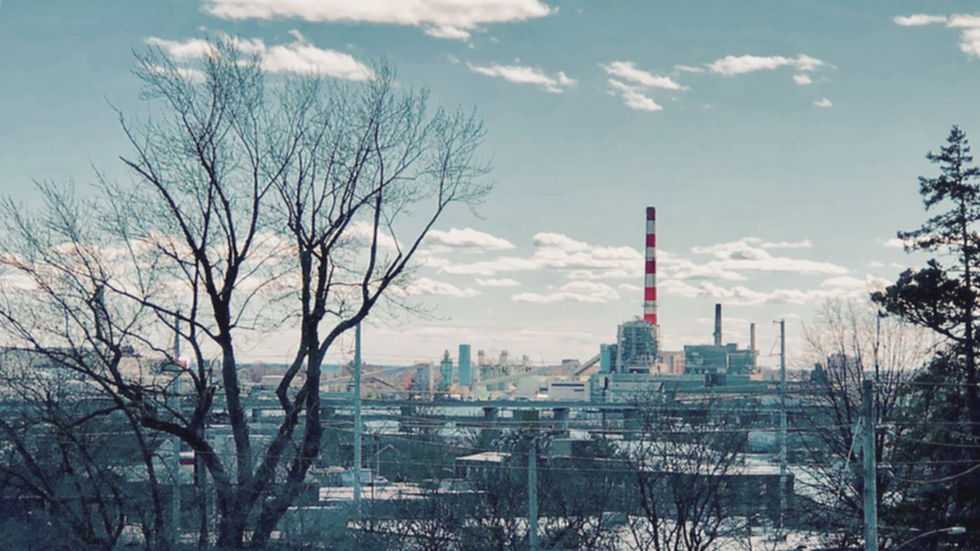
Large industrial sites are difficult to understand from ground level. The aerial view shows scale, context, and relationship to the shoreline in a way that is hard to capture any other way.
Ground level is useful right up until the subject is 500 feet tall and refuses to fit into the conversation.
In Bridgeport, much of the plant had already been disassembled over months to remove hazardous materials before the implosion brought major sections down.
That sequence matters. Once redevelopment begins, the visual record of what stood there tends to disappear quickly.
Not every structure is preserved physically. Many can, and should, be preserved visually.
If you’re working on a preservation, municipal, or nonprofit project and anticipate structural change, early documentation can become part of your long-term institutional record.
I’m open to discussing an approach that produces organized, clearly labeled deliverables your team can retain and reuse over time. For details, Get in Touch.


Comments